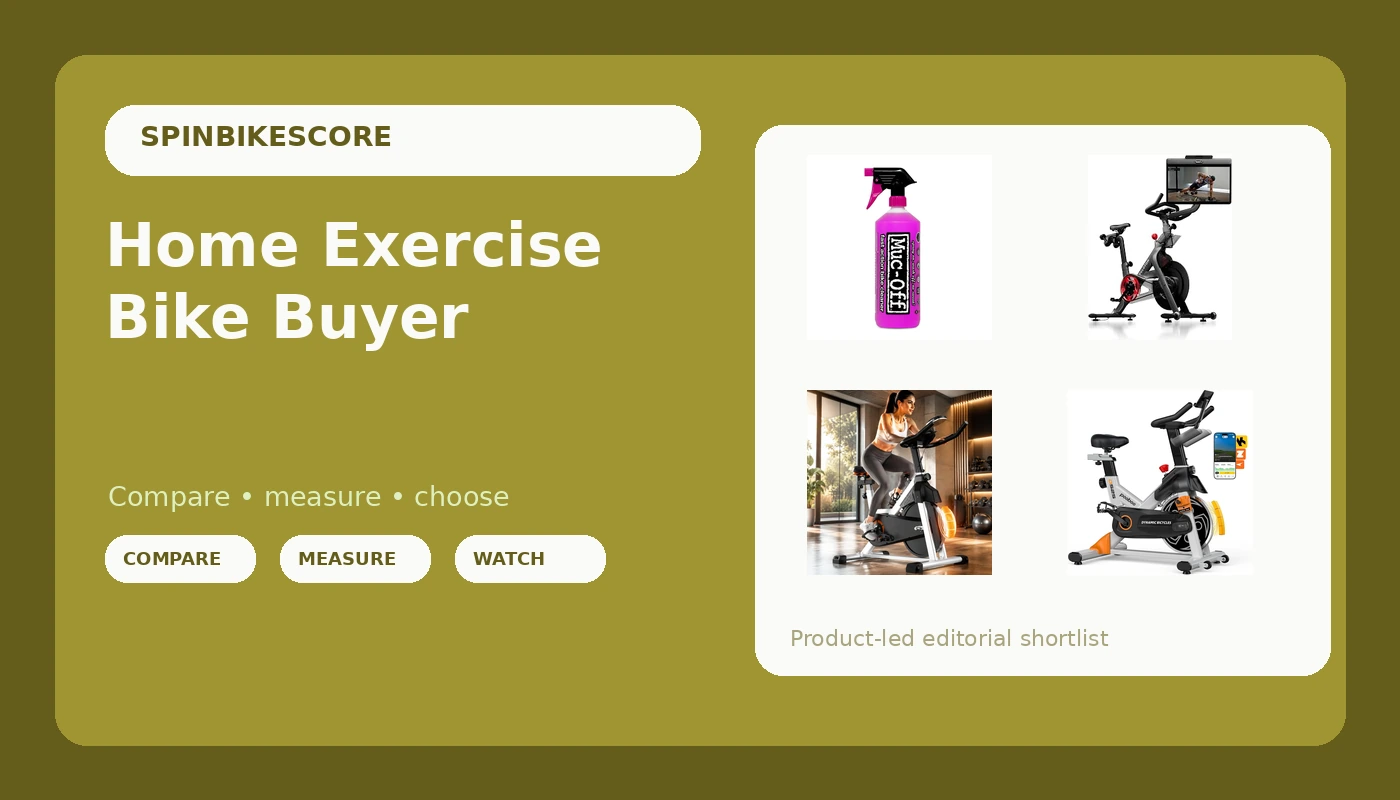
Most people shopping for a home exercise bike get stuck in the same place. The price range is enormous, the spec sheets all use the same words, and nothing on the page tells you which machine is built for the way you actually ride. A connected bike with a screen and a subscription and a simple belt-driven magnetic bike both get described as indoor cycling, yet they are aimed at two different riders with two different budgets.
This guide covers four products that span that range: three bikes and one maintenance item. It explains what each one is for, where the money goes, and how to decide without overbuying or underspending.
Related: How to Set Up a Spin Bike for Your Body →
Quick answer
There is no single winner here, because the right home exercise bike depends on whether you want a training platform or just a machine. The Peloton is the connected option and the most expensive of the three bikes by a wide margin. The 400 lb capacity magnetic bike and the pooboo are belt-driven home bikes for riders who want to ride without a subscription, with the pooboo adding app support. The Muc-Off cleaner is a maintenance add-on, not a bike. If you want classes built into the bike, compare everything against the Peloton. If you want to spend in the low hundreds, the two magnetic bikes are the real comparison, and the differences between them come down to capacity, app support, and resistance feel.
4 useful options
| Model | Best fit | What stands out |
|---|---|---|
| Peloton Exercise Bikes, Indoor Stationary Cross Training Bikes for Home Item | Riders who want built-in classes and a connected platform | The premium option in this group and the only one sold as part of a branded class ecosystem |
| Exercise Bike, Magnetic Stationary Bikes for Home Cardio with Brake Pad Silent Belt Drive, 400LB Weight Capacity Indoor Cycling Bike with Adjustable Seat & Water Bottle Holders for Adults & Seniors | Riders who want the lowest entry cost and a high weight capacity | Magnetic resistance with a brake pad, a belt drive, and a 400 lb weight capacity rating |
| pooboo Magnetic Exercise Bike, Indoor Stationary Bicycle for Home with App | Riders who want app-connected riding on their own device | Magnetic resistance with app support in a mid-range package |
| Muc-Off Bike degreaser Bike Cleaner 1L | Anyone keeping a bike clean between services | A one liter bottle of bike degreaser and cleaner |
The connected option: Peloton Exercise Bikes, Indoor Stationary Cross Training Bikes for Home Item
The Peloton is the outlier here because you are buying a training platform as much as a bike. What separates it from the two magnetic bikes is the connected experience: the classes, the screen, and the subscription that makes those classes work. That subscription is a recurring cost, so the number worth planning for is the bike plus whatever the platform charges over the months you intend to ride.
If you already pay for a streaming fitness service and use it consistently, the math can make sense. If you know you will ride to your own music or free videos, you are paying for a feature you will not use, and a simpler magnetic bike will feel like better value. The other thing to weigh is that a connected bike ties you to one company's software. Before buying, it is worth understanding what the bike can still do if you stop subscribing.
The value pick: Exercise Bike, Magnetic Stationary Bikes for Home Cardio with Brake Pad Silent Belt Drive, 400LB Weight Capacity Indoor Cycling Bike with Adjustable Seat & Water Bottle Holders for Adults & Seniors
This is the value-focused bike in the group. The name covers the essentials: magnetic resistance, a brake pad, a belt drive, a 400 lb weight capacity, an adjustable seat, and water bottle holders. For a rider who wants to pedal at home without a subscription, that combination is the whole purchase.
Two details are worth checking before you commit. First, confirm that the seat and handlebar adjustment ranges match your height, because a bike that does not fit is a bike that goes unused. Second, look at how resistance is adjusted and whether replacement parts are easy to find. On budget bikes, the resistance mechanism and the saddle are usually the first components that need attention, so knowing the parts situation up front saves frustration later.
The app pick: pooboo Magnetic Exercise Bike, Indoor Stationary Bicycle for Home with App
The pooboo sits between the two extremes, and app support is its reason for being here. It is a magnetic home bike in the same broad category as the model above, with an app-connected riding experience layered on top. If you want structure without paying for a connected bike, this is the middle path: you supply the phone or tablet, and the app supplies the programming.
The trade-off is that your experience depends on the app you pair with the bike and on the device you already own. Before buying, confirm which apps the bike supports and think about where the screen will sit during a ride. A bike is only as motivating as the setup around it.
The maintenance add-on: Muc-Off Bike degreaser Bike Cleaner 1L
This is not a bike, and that is exactly why it belongs in the comparison. Sweat is hard on every bike in a home gym, and dust is hard on any bike that lives in a garage or basement. A one liter bottle of degreaser and cleaner is the kind of consumable that keeps a frame and drivetrain in shape between deeper services. If you are spending on a bike, spending a little on keeping it clean is the cheapest protection you can buy for that purchase.
Follow the label directions, keep it away from surfaces the manufacturer says to avoid, and test on a small area before using anything aggressive on painted parts.
Prices and availability may change. Confirm current specifications, warranty terms, and subscription details on the listing before buying. This page does not state a current price, rating, stock status, or measured test result.
How resistance type and drive type change the ride
Resistance is the part of a bike you feel on every pedal stroke, so it is worth understanding before you compare models.
Magnetic resistance works by moving magnets closer to the flywheel. Nothing makes contact, so there is no pad to wear down in normal use, and the resistance tends to feel smooth and consistent across its range. A brake pad or felt pad system presses a pad against the flywheel instead. It is simpler and often cheaper to build, and it works well, but the pad wears over time and the feel can change as it does.
Drive type matters too. A belt drive connects the pedals to the flywheel with a toothed belt rather than a chain. Belts need less maintenance, do not require oil, and generally run with less noise and vibration. A chain drive is a known quantity: easy to service, durable, and common on heavier commercial machines.
One caution about noise claims. Words like silent and whisper quiet describe a design intent, not a measured result. A belt-driven magnetic bike is typically quieter than a chain-driven bike with felt pads, but the floor, the room, the pedals, and the rider all affect what you actually hear. If noise matters in your home, look for magnetic resistance and a belt drive, and put a mat under the bike.
What the price gap actually buys
At the low end, your money goes into the frame, the resistance mechanism, and the assembly line. You get a working bike, along with the compromises that come with it: a simpler console, a saddle many riders end up replacing, pedals that may use plastic cages, and fewer adjustment points. None of those are deal breakers by themselves. A budget bike that fits you well will serve you better than an expensive bike that does not.
Moving up a step usually buys a smoother resistance range, a heavier flywheel, better adjustability, and a more solid frame. This is where the difference between a bike you tolerate and a bike you look forward to shows up, especially when you stand out of the saddle at high resistance.
At the connected end, a large share of the price is the screen and the platform rather than the frame. That is not a criticism, it is a description of what you are buying. If the classes keep you riding, the platform has value. If they do not, you are paying for hardware and software you will not use.
Flywheel weight deserves a note. Heavier flywheels smooth out the pedal stroke and hold momentum, which feels good at steady efforts. Lighter flywheels can feel choppier at high cadence. But flywheel weight is one variable among several, and a heavy flywheel on a frame that flexes is not an upgrade.
A five step way to decide
- Decide whether you want a class subscription or independent riding, because that single answer eliminates most of the market.
- Set a total budget that includes any subscription and accessories, not just the bike itself.
- Check the weight capacity and the seat and handlebar adjustment ranges against the tallest and shortest rider in your household.
- Choose a resistance and drive type: magnetic with a belt drive for low maintenance, a pad system only if the price and build justify it.
- Plan for the first replacements, which are usually a saddle that fits, pedals you trust, a floor mat, and cleaner.
Practical guidance for setting up any home bike
- Measure the footprint plus clearance before delivery, and remember you need room to swing a leg over the frame.
- Assemble with the right tools and re-check every bolt after the first few rides, since vibration loosens hardware on new bikes.
- Set saddle height so your knee stays slightly bent at the bottom of the stroke, then adjust fore and aft until your knee tracks over the middle of the pedal.
- Expect to swap the saddle on most budget bikes. It is the cheapest upgrade that changes how long you are willing to sit there.
- Wipe the frame after every sweaty ride and clean the drivetrain on a schedule, then keep the receipt and warranty terms somewhere you can find them.
Which option should you choose?
Choose the Peloton Exercise Bikes, Indoor Stationary Cross Training Bikes for Home Item when you want classes and a screen built into the bike and you are ready to pay for the platform on an ongoing basis. Choose the Exercise Bike, Magnetic Stationary Bikes for Home Cardio with Brake Pad Silent Belt Drive, 400LB Weight Capacity Indoor Cycling Bike with Adjustable Seat & Water Bottle Holders for Adults & Seniors when you want a straightforward magnetic bike with a high weight capacity rating at the lowest entry point in this group. Choose the pooboo Magnetic Exercise Bike, Indoor Stationary Bicycle for Home with App when you want magnetic resistance and app-guided riding using a device you already own. Choose the Muc-Off Bike degreaser Bike Cleaner 1L when you want to keep whichever bike you buy clean and working.
The details here come from the product listings rather than from long-term ownership, so treat the feature lists as a starting point. Weight capacity, adjustment range, and app compatibility are the three specifications most likely to decide whether a bike works for you, and all three are worth confirming on the current listing rather than trusting any summary, including this one.
The bottom line
The right home exercise bike is the one that matches how you plan to ride, not the one with the longest feature list. If classes keep you motivated, the Peloton is the option built around that, and the subscription is part of the cost of ownership. If you want to ride on your own terms, the two magnetic bikes cover the budget end of the market, one leaning on weight capacity and the other on app support. Whichever you pick, budget for a saddle that fits, a mat, and a bottle of cleaner, because those small extras decide how often the bike actually gets used.